How To Add Storage Without Adding More Square Footage
June 21, 2026
Millions of people are running out of room in their homes – not because their living spaces are too small, but because they’re not using the space they have as efficiently as they could. Whether you live in a small apartment or a larger house, clutter accumulates over time and the desire to “just add more space” can lead to expensive renovations or even unnecessary property upgrades. The good news is that with the right strategies and tools – including flexible storage solutions – you can dramatically increase your functional storage capacity without breaking ground on a single extension.
Re-imagine the Space You Have Today
Before you buy a single shelf or storage bin, take a good look at what space you have now. Most houses contain several spaces that are not used, but with a little imagination, these can be transformed into useful storage areas.
Look up. Always one of the common problems is the tendency to forget about vertical space on the walls and focus on storage at the floor level. If you have floor-to-ceiling shelving units in your living room, bedroom, hallway or home office, you can instantly multiply your usable storage without taking up any additional square footage. High shelves are particularly useful for storing seasonal items, appliances used only occasionally, or archival documents that aren’t needed on a daily basis.
Don’t forget about the dead spaces in your home either. That awkward corner behind a door, the narrow space between the refrigerator and the wall, the area under the stairs, or the space under your bed. Custom or modular storage systems designed to fit into these small spaces can turn unused areas into organized compartments that can hold much more than you might think.
Vertical Is Best In All Rooms
The principle of vertical storage deserves its own separate focus, as it applies to virtually every room in a home, often with dramatic results.
Keep cooking tools and spices within reach – without sacrificing drawer space – with open shelving above countertops or mounted magnetic strips on backsplash tiles in the kitchen. You can eliminate entire rows of cabinets that once held large cookware by hanging pot racks.
Bedrooms – for adults or children – have lofted bedframes that lift the bed and create a totally usable area underneath. Depending on the height of the ceiling and your needs this room can be used for a desk, a wardrobe, a reading nook or just some drawer storage.
Garages are likely the most underutilized storage spaces in any home. You can store all of your tools, seasonal equipment, sports gear and gardening supplies on wall-mounted pegboards, overhead ceiling racks and tall shelving units along the walls of your garage – freeing up space on the floor for vehicles.
Choose Multi-Functional Furniture
Dual purpose furniture is one of the best investments you can make as a homeowner or a renter. Ottoman benches with hidden storage, bed bases with built-in drawers, dining tables with shelving bases and sofas with pockets beneath the cushions all provide storage without taking up any additional floor space.
Murphy beds or wall beds are great for studio apartments or guest rooms. They fold down flat against the wall, thereby opening up an entire living space that would otherwise be dominated by a permanent bed frame. Some designs even come with shelving or a fold-out desk for added functionality.
Another good example are the built-in window seats with lift top lids. They are a nice place to read or relax and have a surprisingly spacious inside compartment perfect for blankets, board games or off-season clothes.
Make The Best Of Your Closet
Most regular closets (reach in or walk in) will be made with a hanging rod and maybe one shelf over that. This is just the tip of the iceberg of what a closet can really hold.
Adding a double hanging rod doubles the space for shorter items like shirts, jackets and folded pants. Make use of pull out drawers or tiered shoe racks to maximize floor space beneath hanging items. Over-the-door organizers with pockets or hooks offer bonus real estate for accessories, cleaning supplies or pantry overflow.
Total MakeoverConsider a complete remodel using modular closet systems in walk-in closets. You can find these at any home improvement store. These systems can segment the space into designated zones for different types of clothing, accessories and personal items, turning a cluttered walk-in into an efficient, user-friendly storage hub.
Use external storage wisely.
Sometimes the truth is that a house just can’t contain all of the owner’s stuff. This is particularly true if you run a home based business, collect larger items or store seasonal equipment such as boats, ATVs or holiday decorations. In these cases external storage is a cheap and convenient alternative to extending a property.
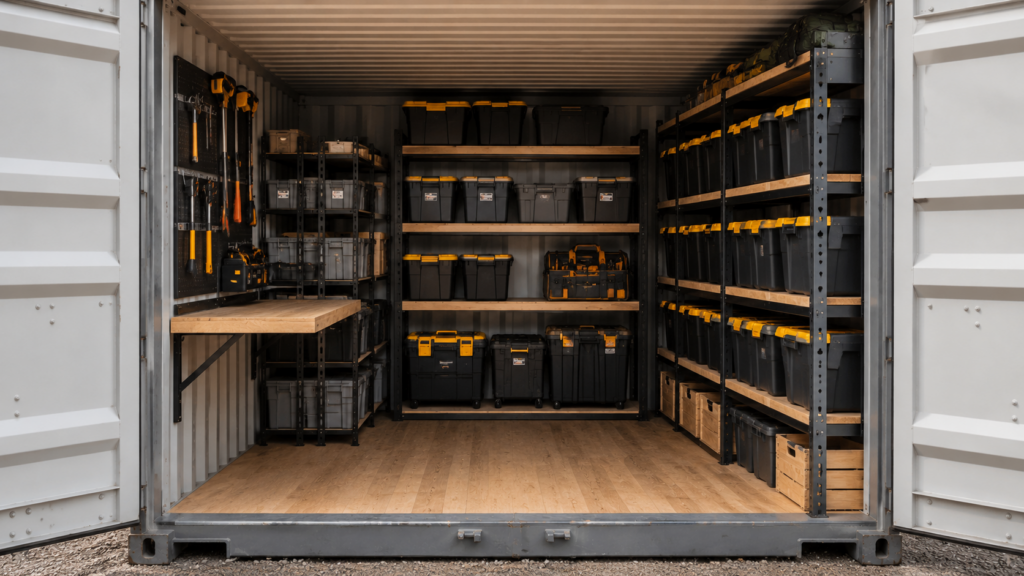
Portable storage containers are a flexible, weather-resistant option that doesn’t require any permanent construction. These containers can be placed on a driveway or other accessible outdoor space. If you require, we can load them at your own pace, keep them on-site for quick access, or move them off-site to a secure storage facility. An on-site container keeps your belongings close to home without sacrificing interior space you’d have with a typical storage unit across town.
It’s popular with homeowners undertaking renovations, families moving from one house to another, or small business owners needing secure, accessible storage for inventory and equipment without the commitment of leasing commercial space.
If you’re thinking of an external storage solution, it’s also good to know what to look for before buying a used container. From structural integrity to long-term durability, here are the major factors to consider: Check this before buying used shipping containers: https://resident.com/resource-guide/2026/03/26/what-to-check-before-buying-used-shipping-containers
Declutter before organizing
Even the best organizational system isn’t going to help you if it’s filled with things you don’t need to keep. Before you try any of the above strategies, take time for the intentional decluttering process.
Go room by room and make piles: keep, donate, sell, toss. Be honest about what things you actually use and what things are just taking up space out of habit or sentiment. Many physical objects now have digital equivalents: scanned documents instead of paper files, digital photographs instead of printed albums, e-books instead of huge shelves of books you’ve already read.
Once you have reduced the number of items that need to be stored the space that you have available is much more manageable and the organizational solutions that you implement will be far more effective.
Smart storage is a matter of systems, not space
But really it’s about changing the mindset to allow for efficient storage at home. Instead, think of storage not as a problem to be solved with physical expansion but as a system that includes smart spatial design, intentional furniture selection, vertical optimization, and honest editing of your stuff.
The strategies detailed here – maximizing vertical wall space, buying dual-purpose furniture, reconfiguring closet spaces, using outside containers and eliminating excess – amount to substantially more storage space without changing the footprint of your property in any way.
If you’re in a city studio or a suburban family home, the space you need is likely already there. It just needs to be discovered, organized and used with purpose.