Overhead Garage Storage: Is Your Ceiling Ready for It?
November 3, 2026
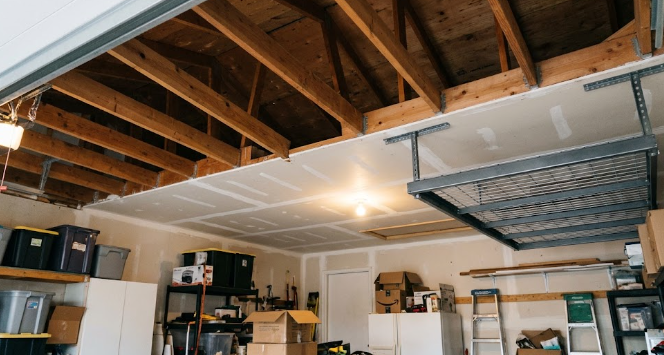
Is Your Garage Ceiling Ready for Overhead Storage?
Your ceiling can work for overhead storage if the joists or trusses are strong enough to hold the weight. You also need enough space over the garage door when it is all the way open. There should not be anything in the way, like the opener, springs, or lights. Without these, the racks may sag or even fall. They could also block the door.
Overhead storage is a good way to get more floor space. You can put holiday bins, camping gear, and luggage above your car. So, these things do not have to be beside your car. But keep in mind that the ceiling is the place where the garage door moves when you open it.
That shared area is why planning is important. Below, you will see what to look for on your ceiling. You will find out how your garage door can change where your rack goes. There are many types of storage that work in different garages, and you will know the cost for each one in the United States.
1. Check What Your Garage Ceiling Is Made Of
Overhead racks need to hang from wood that is strong. Drywall cannot hold the weight by itself. Each rack must be fixed to the frame above. You have to know what type of frame you have first.
Ceiling Joists vs. Roof Trusses
- Joists are strong boards. They go one way and hold up the ceiling.
- Trusses are in a triangle shape. They keep the roof up and are made for lighter weights.
- Framing is set 16 or 24 inches apart. This changes how big racks can be and where you put them.
- Do not cut or make big holes in trusses. Also, do not add boards to them without getting advice from an expert.
Signs Your Ceiling May Not Be Strong Enough
- Drywall that is sagging or shows cracks along the seams
- Water stains that may point to rot or weak wood above
- An older home where the framing has not been checked
- A living space or bonus room that sits right above the garage
Average Cost of a Ceiling Check
- A visit from a structural engineer can cost you about $300 to $700.
- A basic stud and joist finder tool will be around $20 to $60.
2. Measure the Space Around Your Garage Door
When you open your garage door, it goes up and moves along tracks under the ceiling. A rack that hangs too far down or is over these tracks can lead to the door hitting it or make the door shut off. To get to know what room is there, measure the space while the door is open.
Garage Door Headroom Explained
- Headroom is the space from the top of the door opening to the ceiling.
- Standard track systems usually need about 10 to 15 inches of headroom.
- Low-headroom garages do not have much space or may have no space for racks close to the door.
What to Measure Before You Buy Racks
- Open the door all the way. Measure from the top of the door to the ceiling.
- Mark the spot where the horizontal tracks go. Put racks next to them, not over them.
- Check how far the rack comes down after you load it.
- Leave some extra space. This helps the door move a bit as it opens or shuts.
3. Plan Around the Opener, Springs, and Cables
The ceiling close to your garage door has some of its main parts. A rack that hits or blocks these parts can make the door off balance, or it can break the opener. These parts must have open space around them.
Garage Door Parts Racks Should Never Touch
- The opener motor and the long rail run to the door.
- Torsion springs sit above the door opening.
- Lift cables, pulleys, and the emergency release cord are there.
- Ceiling lights and the opener’s light cover can get hot.
When the Opener Is in the Way
A ceiling-mounted opener sits in the center of the area. A lot of people want to use this space for storage. A wall-mounted (jackshaft) opener is placed next to the door. This keeps the middle space free. A company that gives Top Garage Door Services can say if your door will work with one.
- Wall-mount openers work well if you have a torsion spring system.
- The average cost to get one installed is about $600 to $1,200.
4. Know Your Weight Limits Before You Load Up
Most overhead racks can hold from 250 to 600 pounds. But just because an overhead rack is rated for this weight does not mean that your ceiling can handle it. The ceiling’s strength is what really limits how much you can safely put on it.
Rack Rating vs. Ceiling Capacity
- Many garage ceilings can only hold small amounts of weight, usually about 10 to 20 pounds per square foot.
- A 4-by-8-foot rack that is full can have more weight than what a light-duty ceiling should take.
- It is better to spread racks over several joists. Do not hang all the weight in just one area.
What to Store Overhead (and What to Skip)
- Good choices: the kind of things you can store here are holiday decorations, camping gear, empty luggage, and off-season clothes.
- Skip: do not keep heavy tools, paint, chemicals, or things that you use every week.
- Use bins with lids. These help so nothing falls through the rack or drops off when the door shakes.
5. Pick the Right Type of Overhead Storage
Every garage is not the same. The setup that you pick will depend on the ceiling height, how often you get things that are stored, and the space left by the open door. Here are the most common options.
Fixed Ceiling Storage Racks
- Steel platforms hang from the joists at a set height, making ceiling storage racks a practical way to maximize overhead space.
- These are good for things you only use a few times each year.
- They cost about $100 to $400 per rack, or about $300 to $1,000 if you have them installed.
Adjustable and Motorized Storage Lifts
- These platforms can go down to the floor when you use a crank or a remote, so you do not need a ladder.
- These are good if you have high ceilings or want to stay off ladders at home.
- The cost is about $300 to $1,500. It changes with the size and if there is a motor.
Bike Hoists and Small Ceiling Hooks
- Pulley systems help you lift bikes, kayaks, or ladders so they are out of the way.
- These can fit in small spots between the door tracks and the side walls.
- The average cost is about $20 to $150.
6. Overhead Storage Problems to Watch For
Even the best rack needs a check from time to time. Little things, like if a bracket gets bent or the door makes a new sound, can be signs that something is wrong. If you spot these things early, you keep your stuff safe and your garage door working well.
Warning Signs to Check Every Few Months
- Racks that lean, bend, or have loose bolts up on the ceiling
- New cracks in the wallboard close to spots where things are attached
- Bins that move or slide each time the door goes open or shut
Signs the Door Has Been Affected
- There are scrape marks on the top panel or on the tracks.
- The door moves slowly. It jerks or makes more noise than it did before.
- The door stops or goes back when moving up.
If you notice any of these things, stop using the door right away and get in touch with Trusted Garage Door Repair. A door that is not in line may fall off its tracks if you keep using it.
Look Up Before You Load Up
Overhead storage is a good way to get more floor space in your garage. Before you start, check the ceiling and the garage door to make sure they are ready for it. Look at the framing. Measure everything while the door is open. Keep racks away from things that move. Always stay under the safe weight limits. Doing these steps can stop racks from sagging, bins from falling, or the door from getting damaged.
If you do not know if your garage is ready, a pro can help you save time and money. Pioneer Overhead Door will check your door, tracks, and opener before you add racks. This way, your new storage and garage door can work together safely and soundly.