Why Automation is the Secret to Stress-Free Client Management
March 23, 2026
Five years ago, a small service business owner could manage clients just fine with a notebook or an Excel spreadsheet. That approach doesn’t hold up anymore. Request volumes have climbed, clients expect near-instant responses, and competition has sharpened — not just among large companies, but between solo tradespeople and small crews fighting for the same jobs. Miss a reply window by a few hours and the lead is gone. Salesforce research puts it plainly: 80% of customers now rate a company’s response speed as equally important as the quality of the service itself.
Against that backdrop, automating client management has shifted from a nice-to-have into something closer to a survival requirement. But this isn’t about plugging in a CRM and calling it done — it’s about building a system that lets a service business grow without a proportional explosion in operational chaos. What follows covers the real mechanics: where automation actually reduces pressure on people, where it tends to go wrong, and what the numbers say.
Where Clients Disappear: The Anatomy of Manual Chaos
The breakdown almost always happens in the same place — the gap between first contact and confirmed booking. A client submits a request, then waits. The technician is on a job and misses the message. The office calls back too late. The client has already booked someone else.
For businesses working in home services (cleaning, space organization, repairs, installations) this pattern is especially costly. Providers focused on handyman software solutions know this friction point well — most small contractors lose clients not because of poor workmanship, but because they fumble the initial communication and scheduling stage.
What’s Worth Automating and What Isn’t
There’s a common misconception worth addressing upfront: automation doesn’t mean handing client conversations over to bots while nobody notices. Clients do notice. And a meaningful portion of them leave.
What automation does well is eliminating the repetitive, low-value tasks that eat up hours without adding anything to the client relationship:
- Initial request confirmation — an automatic SMS or email the moment a booking comes in, acknowledging receipt and setting a timeline for follow-up.
- Pre-appointment reminders — sent 24 hours and 2 hours before a technician’s arrival. ServiceTitan data suggests this alone cuts no-shows by 30–40%.
- Invoicing and payment collection — triggered automatically when a job is marked complete, with no manual data entry required.
Negotiating complex project details, handling dissatisfied clients, or working through non-standard arrangements — these still need a human. Automation can log the information, but the conversation itself shouldn’t be offloaded.
Scheduling: The Knot That Tangles Everything
Ask service business owners what causes the most daily frustration, and the answer is almost always logistics. Who goes where, when, with what equipment, and whether anything overlaps.
Manual scheduling works reasonably well up to around five or six active technicians. Beyond that, entropy sets in fast — double-booked slots, missing job notes, technicians arriving without the right tools because the brief got buried in a chat thread somewhere.
Platforms like Mr Task address this differently: centralized job dispatching, real-time task tracking, and client-facing status updates that eliminate the “where’s your technician?” phone calls entirely.
This isn’t a niche approach. Angi (formerly Angie’s List) built a significant part of its platform around automated dispatching and job transparency — not by accident. When clients can see what’s happening without calling, it reduces anxiety on their end and reduces interruptions on the business end. Both sides benefit.
Client Communication: Finding the Line Between Silence and Spam
One of the most reliable ways to undermine an otherwise good automation setup is aggressive trigger-based messaging. A client books a cleaning session and spends the next three days receiving emails asking for reviews, pushing subscription packages, and requesting referrals. The effect is the opposite of what’s intended — the company starts feeling like a nuisance.
The practical rule: automated messages should be useful at the exact moment they arrive. Confirmation → reminder → post-job summary → one review request. Everything beyond that is noise.
Businesses in the home organization space (working in a model similar to Organize It) tend to find that clients value predictability over frequency. If someone knows they’ll receive a photo summary and invoice within an hour of job completion every single time, that consistency becomes part of the service itself.
Numbers Worth Keeping in Mind
The field service management software market was valued at roughly $4.5 billion in 2023. Grand View Research projects it will exceed $10 billion by 2030. That’s not background noise — it reflects how many service businesses are actively moving away from manual operations.
| Pain Point | Manual Approach | Automated Approach |
| Response time to new request | 2–6 hours | Under 5 minutes |
| Missed appointment reminders | Frequent | Near zero |
| Client visibility into job status | Only by calling | Real-time |
| Time to issue invoice | 15–30 minutes | Automatic on job close |
The differences in that table aren’t theoretical. They show up in client retention rates, review scores, and the number of hours an owner spends on administration each week.
Why Hiring Another Admin Doesn’t Solve It
The instinct makes sense: more work means more staff. But in service businesses, that math doesn’t scale cleanly. A new administrator takes weeks to get up to speed, makes early mistakes, takes sick days, goes on leave. More importantly, adding headcount solves a capacity problem — it doesn’t solve a systems problem.
Automation scales without incremental cost. A well-configured system handles 10 and 100 daily requests with equal reliability. A person doesn’t.
Jobber and Housecall Pro (both built specifically for service contractors in North America) have reported that owners who migrate to automated management platforms typically spend 30–40% less time on administrative tasks. That time gets redirected toward sales, quality control, and actually running the business.
Automation Isn’t for Big Companies — It’s for Organized Ones
The persistent myth is that automation is expensive and technically complex, built for enterprises with IT departments. The entry point has dropped significantly. Most modern tools for service businesses run between $30 and $150 per month and require no technical background to configure.
The real question isn’t whether a small business can afford it. It’s whether a small business can afford to operate without it when competitors already have these systems in place.
There’s also a dimension that rarely makes it into productivity articles: stress. Owners who move to automated client management consistently describe a reduction in background anxiety — the constant mental load of “don’t forget to follow up, don’t miss the invoice, don’t double-book Thursday.” That’s not a minor point. Chronic operational stress is one of the leading causes of burnout among service entrepreneurs, and removing it has a real effect on decision-making and long-term sustainability.
Structure Is the Service
Automating client management isn’t about replacing people with software. It’s about making sure people spend their time on work that actually requires them and letting the rest run on its own.
When a technician knows their week’s schedule in advance, a client gets confirmation without waiting, and an invoice arrives automatically after job completion — that’s not just efficiency. It’s the standard clients already expect, even if they never say so out loud. The businesses investing in that kind of structure now aren’t just building a smoother operation. They’re building something harder to replicate.
The Minimalist Approach to a Clutter-Free Bedroom
March 17, 2026
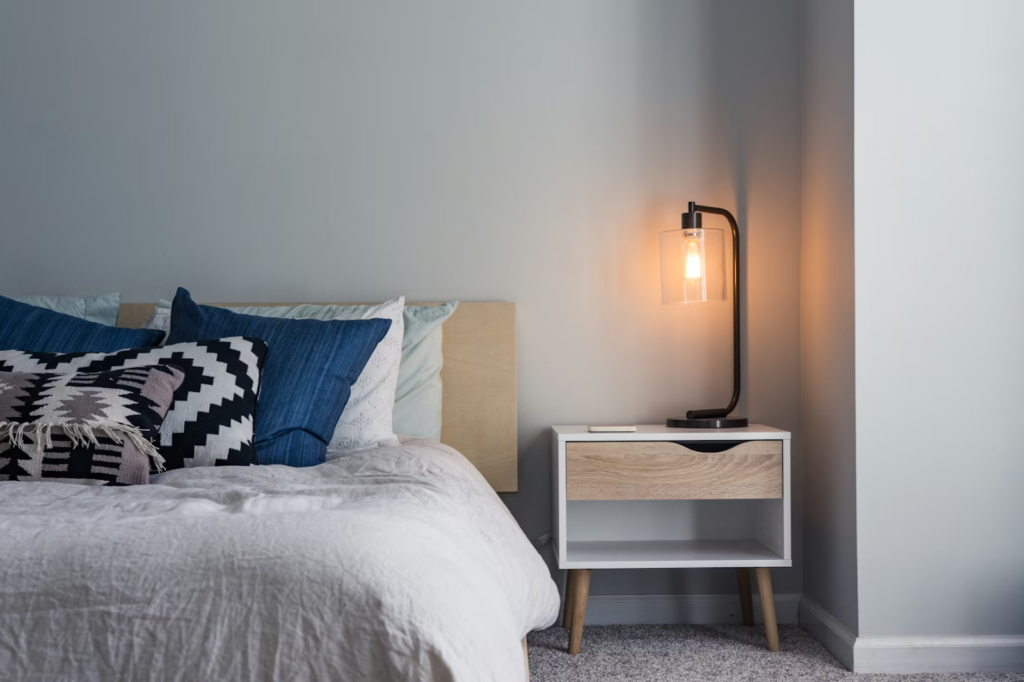
A bedroom should be the most restorative room in the home. When its surfaces are crowded with objects and its corners are filled with things that belong elsewhere, it fails at that fundamental job.
The visual noise of a cluttered space registers in the brain even during sleep, contributing to a low-level tension that undermines the rest you are trying to get.
Adopting a minimalist approach to the bedroom is not about stripping a room of personality. It is about making deliberate choices – keeping what genuinely serves you and letting go of what simply accumulates. The result is a space that feels calmer, cleaner, and significantly easier to maintain.
Improving the Air You Breathe
Decluttering a bedroom often reveals just how much dust and dander has settled into forgotten corners, on crowded surfaces, and beneath furniture that rarely gets moved. Clearing that clutter is the first step; maintaining clean air afterward is the second.
High-quality systems like the air purifiers from Dreame Home Air help to filter out fine particles that regular cleaning cannot fully address, keeping the bedroom atmosphere genuinely fresh rather than superficially tidy.
Minimalism also means fewer objects to collect dust in the first place. A cleared nightstand and a bare dresser top take thirty seconds to wipe down. A surface covered in small decorative objects takes considerably longer – and gets cleaned less often as a result.
Selecting Furniture with Functional Purpose
Every piece of furniture in a minimalist bedroom should justify its presence. Bulky items that are rarely used make a room feel smaller and more oppressive than it needs to be. Evaluating the current layout with fresh eyes often reveals that one or two pieces can be removed entirely without losing any practical function.
A bed frame with built-in storage solves one of the most common bedroom challenges – where to put extra linens and seasonal clothing – without adding square footage of furniture.
When floor space is clear and open, the room breathes differently. The sense of calm that comes from an unobstructed floor is difficult to overstate.
Organizing the Closet to Reduce Visual Stress
The closet is where bedroom clutter most often hides. A minimalist wardrobe means keeping only what you actually wear, fits properly, and reflects how you want to dress.
Removing clothes that have been pushed to the back for a year or more creates an immediate sense of order – and makes the daily routine of choosing an outfit considerably more pleasant.
Uniform hangers and organized shoe racks extend this clarity deeper into the storage space. When everything has a designated place, the closet stops feeling like a problem to be managed and starts functioning as a genuinely useful part of the room.
Managing Surfaces and Bedside Essentials
The nightstand is the most reliable indicator of a bedroom’s organizational health. It attracts everything – books, chargers, glasses, hand cream, receipts – and quickly becomes the visual focal point of the room, for all the wrong reasons.
Limit the surface to what you actually use each night: a lamp, perhaps a single book, a glass of water. If a drawer is available, use it to keep the top clear.
Removing electronics from the bedroom entirely – or at minimum from the bedside – is one of the most impactful changes for sleep quality, as it separates the space from the cognitive associations of work and scrolling that make it harder to wind down.
Streamlining Decor for a Calming Effect
Minimalism does not require a room stripped of warmth or character. It requires intention. One large, carefully chosen piece of art creates more visual impact than a wall crowded with smaller frames – and contributes to a sense of calm rather than stimulation.
A neutral color palette with natural textures – cotton, linen, raw wood – enhances the feeling of a sanctuary without demanding attention.
Quality bedding in natural fibers feels noticeably better to sleep in and adds genuine comfort rather than decorative complexity. Every object in the room should earn its place through either beauty or function, ideally both.
Maintaining a Sustainable Sense of Order
A minimalist bedroom requires maintenance to stay that way. The temptation to set something down on a cleared surface is constant; the discipline to put it where it belongs is what preserves the environment you have created.
A few minutes of tidying each morning – making the bed, returning items to their places – prevents the gradual accumulation that eventually makes a room feel chaotic again.
Over time, living in a simplified space tends to recalibrate what feels necessary. The impulsive purchase that would have once seemed essential starts to look like future clutter. That shift in perspective is, in many ways, the real achievement of the minimalist bedroom – not just a tidy room, but a different relationship with the objects in your life.
Kid Bedroom Layouts That Actually Stay Tidy
March 12, 2026

Source: Unsplash
Designing a child’s bedroom that actually stays tidy requires more than stylish furniture and extra storage bins. The way a room is arranged has a direct impact on daily habits, cleanup routines, and overall organization. When the layout supports how children naturally play, sleep, and dress, maintaining order becomes much easier.
Before you start to shop kids and toddler beds, it is important to think beyond aesthetics and focus on functionality. A thoughtful layout helps reduce clutter at its source, encourages independence, and makes everyday routines smoother for both children and parents.
1. The Zoned Layout for Clear Boundaries
This layout divides the bedroom into zones for sleeping, playing, studying, and dressing. Instead of placing furniture willy-nilly around the room, each zone has a specific purpose. This provides clear visualization and helps children understand the purpose of each zone.
Having a play zone separate from the sleeping zone ensures that toys do not get in the way of the bed. Having a dressing zone ensures that clothes do not get in the way. This layout helps children improve their behavior and encourages them to keep their rooms clean.
2. The Storage Bed Layout for Small Rooms
This layout works well for small rooms where space is limited and a dresser might get in the way. The storage-bed layout provides built-in drawers and compartments under the mattress. This ensures that clothes and other items get stored in one place without taking up valuable space.
Having one large piece of furniture in the room provides an open space and reduces clutter. This layout ensures that children can reach their belongings without assistance and encourages them to put items in their proper place.
3. The Corner Bed Layout for Maximum Floor Space
This layout works well for children’s rooms because it provides maximum floor space in the middle of the room. Tucking the bed into a corner provides maximum space in the middle of the room. This layout works well for toddlers and younger children who love to play on the floor.
Having the bed tucked into a corner provides maximum space in the middle of the room. This ensures that children have an open space for playing and helps keep the mess organized.
4. The Loft Bed with Activity Zone Underneath
Placing the bed on a loft provides an opportunity to utilize the space below for other activities. This space may be converted into a study area, a reading area, or even a storage space. This helps create a balance in the room’s design.
This concept works well in small rooms. This concept maximizes space and ensures the room remains airy and spacious. At the same time, it provides a dedicated space for activities.
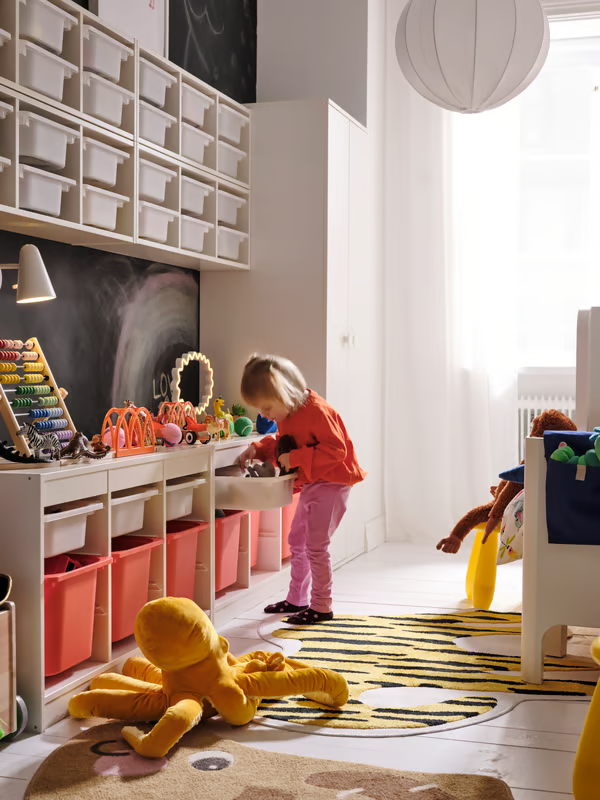
5. The Wall-to-Wall Low Storage Layout
Source: IKEA
This concept provides for independent living. Instead of using high shelves, this concept uses low shelves and open shelves at a height equivalent to the child’s.
This concept encourages children to keep their belongings in place. This concept works well in small rooms. This concept ensures the room remains clutter-free and helps in maintaining organization.
6. The Built-In Drop Zone by the Door
This concept involves creating a built-in zone by the door to keep clutter at bay. This zone provides space for items such as backpacks, shoes, and jackets. This concept works well in small rooms. This concept helps in maintaining a clutter-free zone in the room.
Without this concept, clutter tends to spread in the room. This concept confines clutter in the entry zone and helps maintain a clutter-free room.
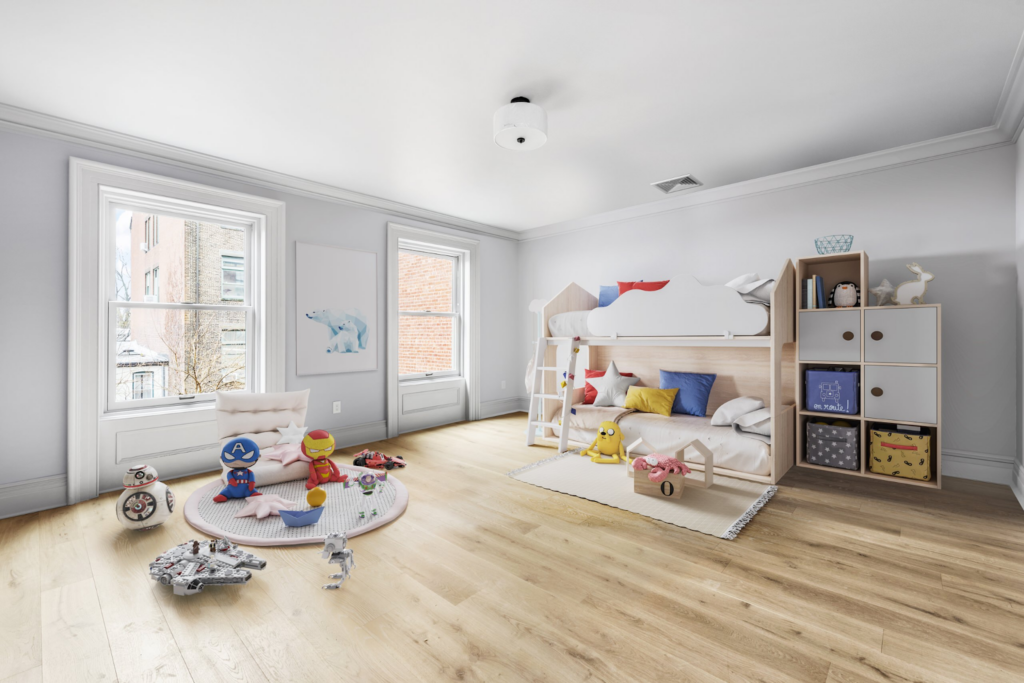
7. The Minimalist Layout with Open Floor Emphasis
Source: Houzz
A minimalist layout uses fewer items of furniture and emphasizes the use of more open spaces. Instead of placing storage items on all the walls, it focuses more on the items that can serve a double function. This creates a clean look for the room.
Open spaces also allow for more active play, but the disadvantage of this layout comes when clutter becomes more noticeable because of the lack of items.
8. The Closet-Optimized Layout
Optimizing the closet layout has a significant impact on the entire bedroom layout. It enables the child to take control of the items in the room by placing them at a lower height, making it easier for them to retrieve the items they need. It also enables the use of more storage items in the closet, reducing the number of items of furniture that have to be purchased for the room.
This layout also enables the child to be more independent, meaning the items will be hung up or stored away rather than scattered all over the room.
9. The Rotational Toy Layout
This layout ensures that the number of toys available for the child at any given time is limited. Instead of the child having all the toys available, a few are stored away and rotated periodically.
This layout ensures the child becomes more engaged with the available toys, making the cleaning process much easier and faster without the need for additional storage items.
10. The Growth-Friendly Flexible Layout
A room that grows with a child isn’t carved in stone. It’s flexible to meet changing needs. Desks, shelves, and beds may change to accommodate growth without requiring a complete redesign every few years. Flexibility is the key to an efficient, easily adaptable layout.
Considering the growth factor in the layout of the kids’ bedroom ensures the space isn’t cluttered with unnecessary furniture that may take up space in the long run. This way, the layout remains efficient and clutter-free over the years.
Why Layout Influences Organization
The position and arrangement of furniture in a room influences behavior. An effective layout in a kid’s bedroom ensures the room matches the kids’ movement. This way, activities like dressing, reading, and cleaning become easier and less stressful for kids.
Instead of investing in additional space for storing items, an effective layout ensures the design of an effective organization system. This way, neatness and order become an effortless behavior for kids.
Smart Layouts Create Lasting Order
Keeping a kid’s bedroom tidy and well-organized isn’t achieved through rigid measures and constant reminders. This can only be achieved through an effective layout. An effective layout ensures an independent kid’s bedroom with zones for everything. This way, maintaining order and cleanliness becomes an effortless task for kids.