Kid Bedroom Layouts That Actually Stay Tidy
March 12, 2026

Source: Unsplash
Designing a child’s bedroom that actually stays tidy requires more than stylish furniture and extra storage bins. The way a room is arranged has a direct impact on daily habits, cleanup routines, and overall organization. When the layout supports how children naturally play, sleep, and dress, maintaining order becomes much easier.
Before you start to shop kids and toddler beds, it is important to think beyond aesthetics and focus on functionality. A thoughtful layout helps reduce clutter at its source, encourages independence, and makes everyday routines smoother for both children and parents.
1. The Zoned Layout for Clear Boundaries
This layout divides the bedroom into zones for sleeping, playing, studying, and dressing. Instead of placing furniture willy-nilly around the room, each zone has a specific purpose. This provides clear visualization and helps children understand the purpose of each zone.
Having a play zone separate from the sleeping zone ensures that toys do not get in the way of the bed. Having a dressing zone ensures that clothes do not get in the way. This layout helps children improve their behavior and encourages them to keep their rooms clean.
2. The Storage Bed Layout for Small Rooms
This layout works well for small rooms where space is limited and a dresser might get in the way. The storage-bed layout provides built-in drawers and compartments under the mattress. This ensures that clothes and other items get stored in one place without taking up valuable space.
Having one large piece of furniture in the room provides an open space and reduces clutter. This layout ensures that children can reach their belongings without assistance and encourages them to put items in their proper place.
3. The Corner Bed Layout for Maximum Floor Space
This layout works well for children’s rooms because it provides maximum floor space in the middle of the room. Tucking the bed into a corner provides maximum space in the middle of the room. This layout works well for toddlers and younger children who love to play on the floor.
Having the bed tucked into a corner provides maximum space in the middle of the room. This ensures that children have an open space for playing and helps keep the mess organized.
4. The Loft Bed with Activity Zone Underneath
Placing the bed on a loft provides an opportunity to utilize the space below for other activities. This space may be converted into a study area, a reading area, or even a storage space. This helps create a balance in the room’s design.
This concept works well in small rooms. This concept maximizes space and ensures the room remains airy and spacious. At the same time, it provides a dedicated space for activities.
5. The Wall-to-Wall Low Storage Layout
Source: IKEA
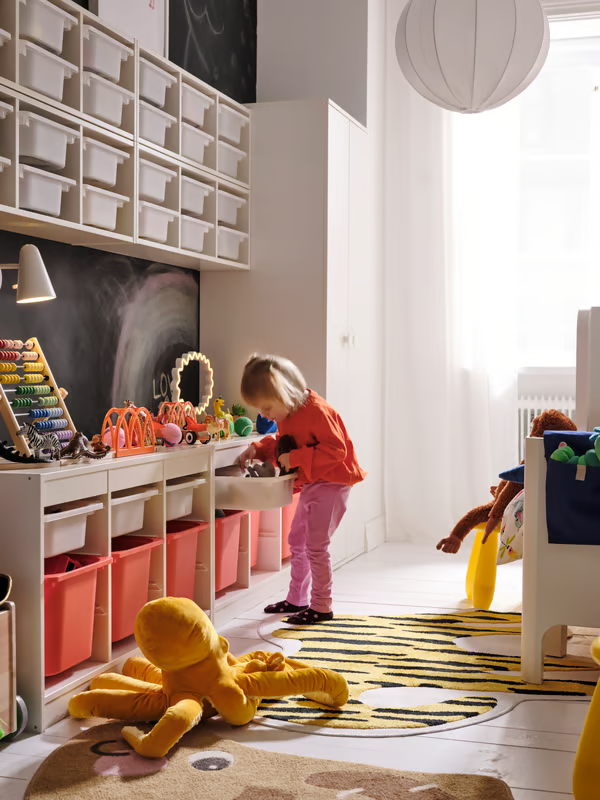
This concept provides for independent living. Instead of using high shelves, this concept uses low shelves and open shelves at a height equivalent to the child’s.
This concept encourages children to keep their belongings in place. This concept works well in small rooms. This concept ensures the room remains clutter-free and helps in maintaining organization.
6. The Built-In Drop Zone by the Door
This concept involves creating a built-in zone by the door to keep clutter at bay. This zone provides space for items such as backpacks, shoes, and jackets. This concept works well in small rooms. This concept helps in maintaining a clutter-free zone in the room.
Without this concept, clutter tends to spread in the room. This concept confines clutter in the entry zone and helps maintain a clutter-free room.
7. The Minimalist Layout with Open Floor Emphasis
Source: Houzz
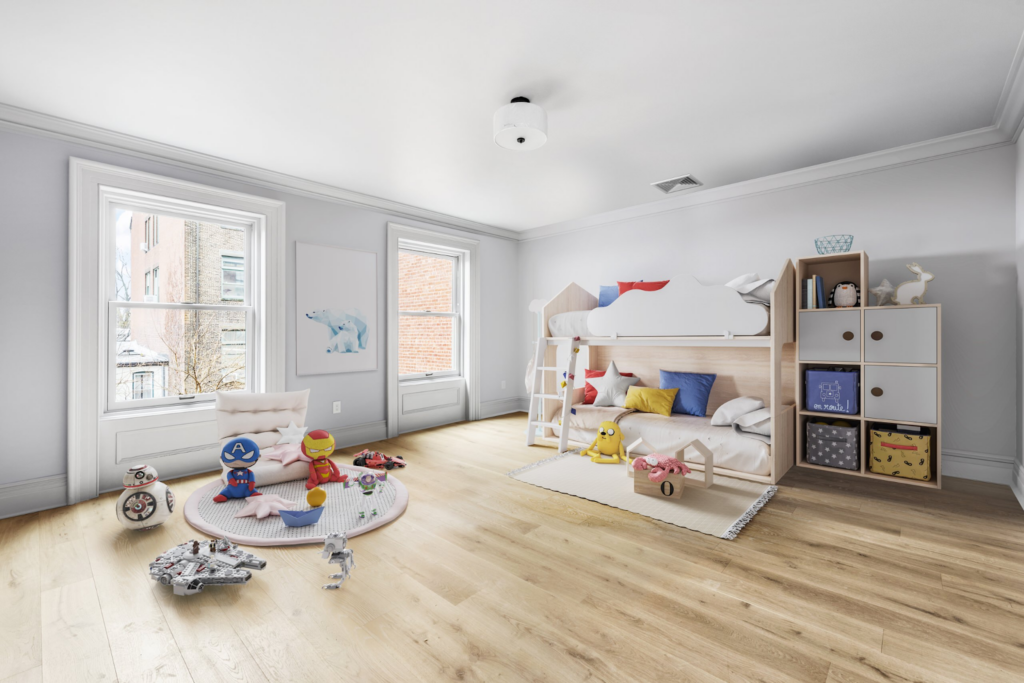
A minimalist layout uses fewer items of furniture and emphasizes the use of more open spaces. Instead of placing storage items on all the walls, it focuses more on the items that can serve a double function. This creates a clean look for the room.
Open spaces also allow for more active play, but the disadvantage of this layout comes when clutter becomes more noticeable because of the lack of items.
8. The Closet-Optimized Layout
Optimizing the closet layout has a significant impact on the entire bedroom layout. It enables the child to take control of the items in the room by placing them at a lower height, making it easier for them to retrieve the items they need. It also enables the use of more storage items in the closet, reducing the number of items of furniture that have to be purchased for the room.
This layout also enables the child to be more independent, meaning the items will be hung up or stored away rather than scattered all over the room.
9. The Rotational Toy Layout
This layout ensures that the number of toys available for the child at any given time is limited. Instead of the child having all the toys available, a few are stored away and rotated periodically.
This layout ensures the child becomes more engaged with the available toys, making the cleaning process much easier and faster without the need for additional storage items.
10. The Growth-Friendly Flexible Layout
A room that grows with a child isn’t carved in stone. It’s flexible to meet changing needs. Desks, shelves, and beds may change to accommodate growth without requiring a complete redesign every few years. Flexibility is the key to an efficient, easily adaptable layout.
Considering the growth factor in the layout of the kids’ bedroom ensures the space isn’t cluttered with unnecessary furniture that may take up space in the long run. This way, the layout remains efficient and clutter-free over the years.
Why Layout Influences Organization
The position and arrangement of furniture in a room influences behavior. An effective layout in a kid’s bedroom ensures the room matches the kids’ movement. This way, activities like dressing, reading, and cleaning become easier and less stressful for kids.
Instead of investing in additional space for storing items, an effective layout ensures the design of an effective organization system. This way, neatness and order become an effortless behavior for kids.
Smart Layouts Create Lasting Order
Keeping a kid’s bedroom tidy and well-organized isn’t achieved through rigid measures and constant reminders. This can only be achieved through an effective layout. An effective layout ensures an independent kid’s bedroom with zones for everything. This way, maintaining order and cleanliness becomes an effortless task for kids.